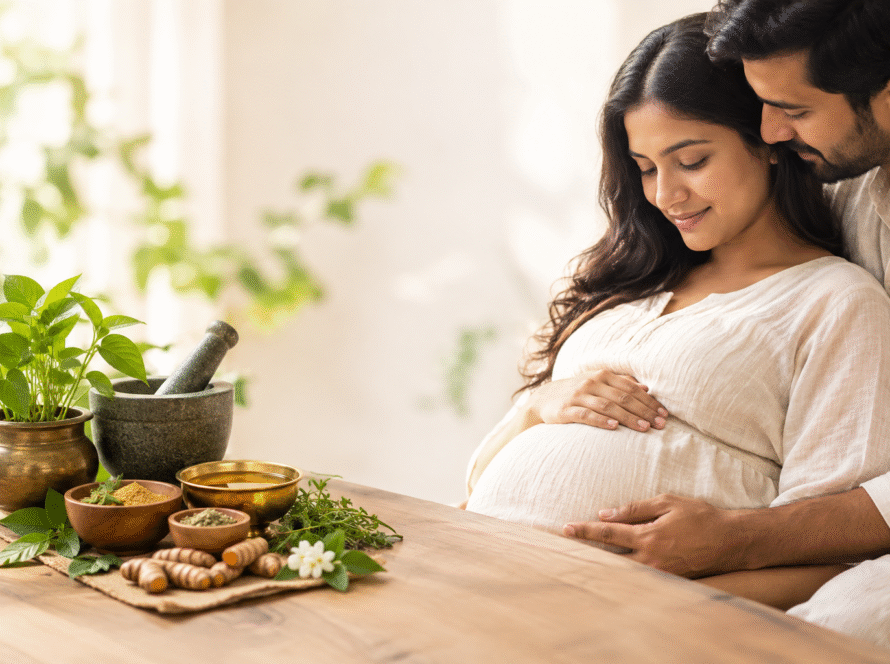


An Ayurvedic pregnancy diet focuses on warm, fresh, and easily digestible food that supports the mother’s dosha balance and the baby’s growth. Ayurveda treats pregnancy nutrition as a trimester-based process, not a single fixed meal plan. This guide breaks down what to eat, what to avoid, and how food choices should change as pregnancy progresses.
What Is an Ayurvedic Pregnancy Diet?
An Ayurvedic pregnancy diet is a food plan based on classical Ayurvedic texts like the Charaka Samhita, designed to nourish the mother and support fetal development through digestion-friendly food choices.
Ayurveda calls this practice “Garbhini Paricharya,” meaning care during pregnancy. This system links diet directly to the mother’s dominant dosha, which can be Vata, Pitta, or Kapha. Food recommendations shift month by month rather than staying fixed for all nine months. The goal is to keep digestion strong (called Agni in Ayurveda) since weak digestion is believed to affect nutrient absorption for both mother and baby. Practitioners in Kerala, a region known for traditional Ayurvedic pregnancy care, often combine this diet advice with light daily routines and herbal support under professional guidance.
What Foods Should You Eat During Pregnancy According to Ayurveda?
Ayurveda recommends warm, freshly cooked, and mildly spiced food during pregnancy for easier digestion and better nutrient absorption.
The following foods are commonly included in an Ayurvedic pregnancy diet:
- Ghee (clarified butter): Considered one of the most important foods in Ayurvedic pregnancy care. It supports fetal brain development and lubricates the digestive tract.
- Moong dal (split green gram): Light on digestion and rich in protein.
- Whole grains: Rice, wheat, and millets provide sustained energy.
- Fresh seasonal fruits: Pomegranate, banana, and apple are commonly recommended.
- Milk with warming spices: Milk boiled with a pinch of turmeric or cardamom is a traditional bedtime drink.
- Root vegetables: Sweet potato and carrot support Vata balance.
- Dry fruits: Soaked almonds and dates are used for iron and energy.
- Ghee-roasted nuts and seeds: Sesame seeds are traditionally used in the third trimester.
Each of these foods is chosen for a specific digestive or nutritional reason rather than general wellness value. Ayurvedic practitioners usually personalize this list based on the mother’s dosha type and any pregnancy complications.
How Does Ayurveda Divide Pregnancy Nutrition by Trimester?
Ayurveda changes diet recommendations across three trimesters, moving from light food early on to more grounding, nutrient-dense food later in pregnancy.
Trimester | Ayurvedic Focus | Recommended Foods |
First (Weeks 1–12) | Easing nausea, light digestion | Rice water, moong dal soup, ginger tea, light khichdi |
Second (Weeks 13–27) | Building tissue and strength | Ghee, milk, whole grains, seasonal vegetables, dry fruits |
Third (Weeks 28–40) | Preparing for delivery, Vata balance | Warm soups, sesame seeds, ghee, easily digestible proteins |
This trimester-based approach comes from classical Ayurvedic texts, which describe monthly dietary rules known as “Masanumasika Paricharya.” Each stage supports a different aspect of fetal growth. Early pregnancy focuses on settling digestion because nausea is common in this phase. Mid-pregnancy shifts toward tissue-building foods as the baby’s organs develop. Late pregnancy emphasizes Vata-pacifying, warm, and oily food to prepare the body for labor.
What Foods Should You Avoid During Pregnancy in Ayurveda?
Ayurveda advises avoiding heavy, cold, stale, and excessively spicy food during pregnancy because these are believed to disturb digestion and aggravate Vata dosha.
Foods generally avoided in an Ayurvedic pregnancy diet include:
- Deep-fried and oily street food
- Excess caffeine and carbonated drinks
- Leftover or reheated food
- Very cold food and drinks straight from the refrigerator
- Excessive raw salads in large quantities
- Papaya and pineapple in early pregnancy, due to their traditional association with uterine stimulation
- Processed and packaged snacks with artificial preservatives
These restrictions are based on the idea that pregnancy requires stable, easy-to-digest nourishment rather than food that creates gas, bloating, or irregular digestion. Modern nutrition guidance also supports limiting processed food and excess caffeine during pregnancy, which overlaps with these traditional recommendations.
How Does Dosha Type Affect an Ayurvedic Pregnancy Diet?
A mother’s dominant dosha changes which foods suit her best during pregnancy, since Vata, Pitta, and Kapha types respond differently to temperature, texture, and taste.
Dosha Type | Common Traits in Pregnancy | Suitable Foods |
Vata | Dry skin, anxiety, irregular digestion | Warm, oily, and grounding food like ghee, milk, and cooked grains |
Pitta | Heartburn, excess body heat | Cooling foods like coconut water, cucumber, and mild-spiced meals |
Kapha | Slower digestion, water retention | Light, warm food with less dairy and more spices like ginger and cumin |
Ayurvedic consultants typically assess dosha type through pulse diagnosis and a review of the mother’s symptoms before finalizing a diet plan. This is one reason a personalized consultation often works better than a generic pregnancy diet chart. A Vata-dominant mother may need more ghee and warm soups, while a Pitta-dominant mother may need to reduce spicy and sour food.
What Are Simple Ayurvedic Diet Tips for a Healthy Pregnancy?
Simple Ayurvedic pregnancy diet tips include eating warm meals, avoiding overeating, and maintaining fixed meal timings for stronger digestion.
- Eat freshly cooked meals instead of stored or packaged food.
- Include one teaspoon of ghee with meals unless advised otherwise.
- Drink warm water instead of cold water through the day.
- Eat smaller, more frequent meals rather than three large ones.
- Avoid eating late at night, especially in the third trimester.
- Chew food slowly to support digestion.
- Include soaked almonds or dates for natural iron support.
These habits work alongside medical prenatal care rather than replacing it. Iron and folic acid needs during pregnancy are commonly monitored through standard antenatal checkups, and Ayurvedic diet planning is best used as a supportive approach under professional supervision.
Every mother’s body and dosha balance is different, so a diet chart that works for one person may not suit another. A personalized assessment gives more accurate results than a general list of do’s and don’ts.
Talk to a certified Ayurvedic pregnancy specialist to get a diet plan based on your trimester and dosha type — book an Ayurvedic pregnancy consultation today.
Frequently Asked Questions
Yes, ghee is considered one of the most beneficial foods in Ayurvedic pregnancy care for digestion and fetal nourishment.
Yes, Ayurvedic pregnancy diet guidance is meant to work alongside regular antenatal checkups, not replace them.
No, Ayurveda changes food recommendations for each trimester based on the mother’s digestive strength and the baby’s growth stage.
Papaya and pineapple are traditionally avoided in early pregnancy in Ayurvedic practice.
Disclaimer: This article is for general informational purposes only and does not replace professional medical advice. Pregnancy nutrition needs vary from person to person, so consult your gynecologist or a qualified Ayurvedic practitioner before making any dietary changes during pregnancy.